Spirited Away: Discovering the Real Spirit World
Hayao Miyazaki's "Spirited Away" (2001) is not simply one of the greatest animated films ever made — it is a cultural landmark. The story follows ten-year-old Chihiro, a sullen girl being dragged to a new town by her parents, who stumbles through a mysterious tunnel into a world of spirits, gods, and monsters. When her parents are transformed into pigs after gorging on spirit food, Chihiro must work in a grand bathhouse run by the fearsome witch Yubaba, shedding her timidity and discovering reserves of courage she never knew she had. The film earned the Academy Award for Best Animated Feature in 2003 — the only hand-drawn and non-English-language animated film to win the award — and held the record as Japan's highest-grossing film for nearly two decades with 316 billion yen at the domestic box office. Its themes of environmental respect, the loss of childhood innocence, and the power of remembering one's own name have resonated across generations and cultures, making it one of the most universally beloved films in cinema history.
Reality vs. Animation: Jiufen, Edo-Tokyo Museum, and Ginzan Onsen
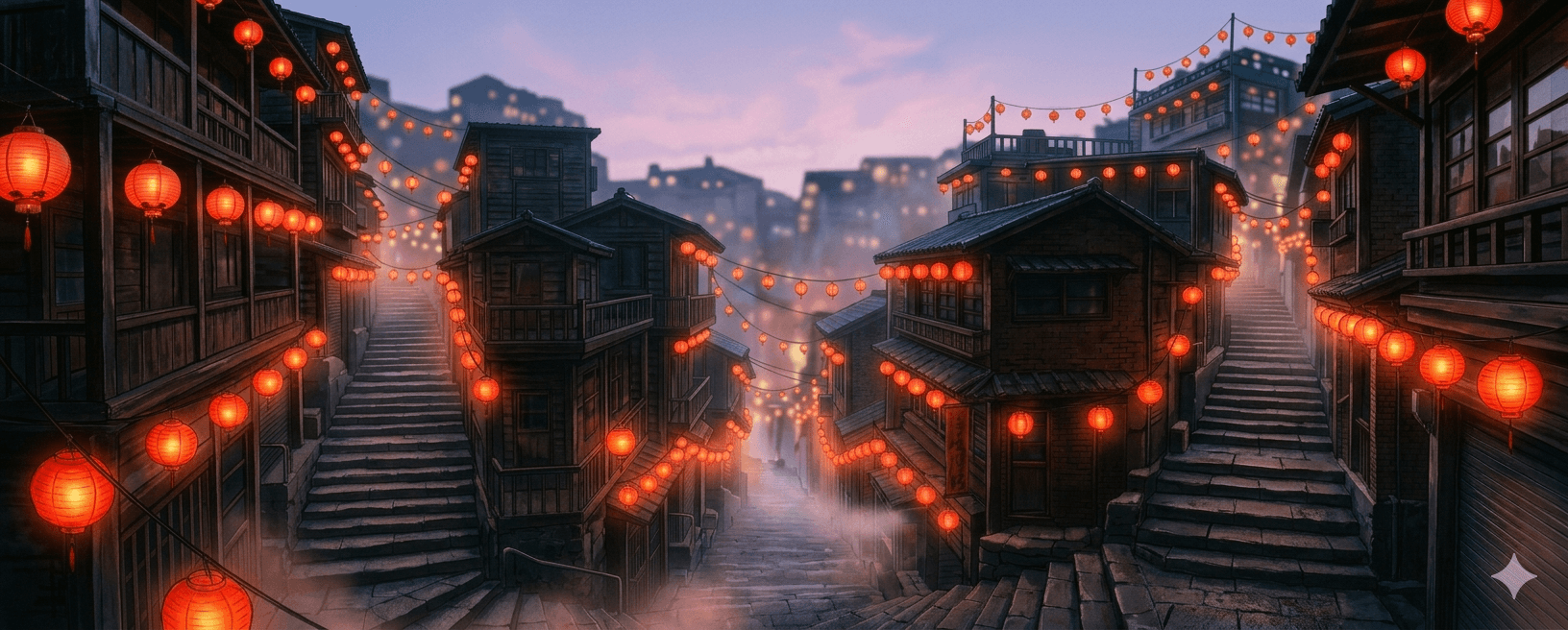
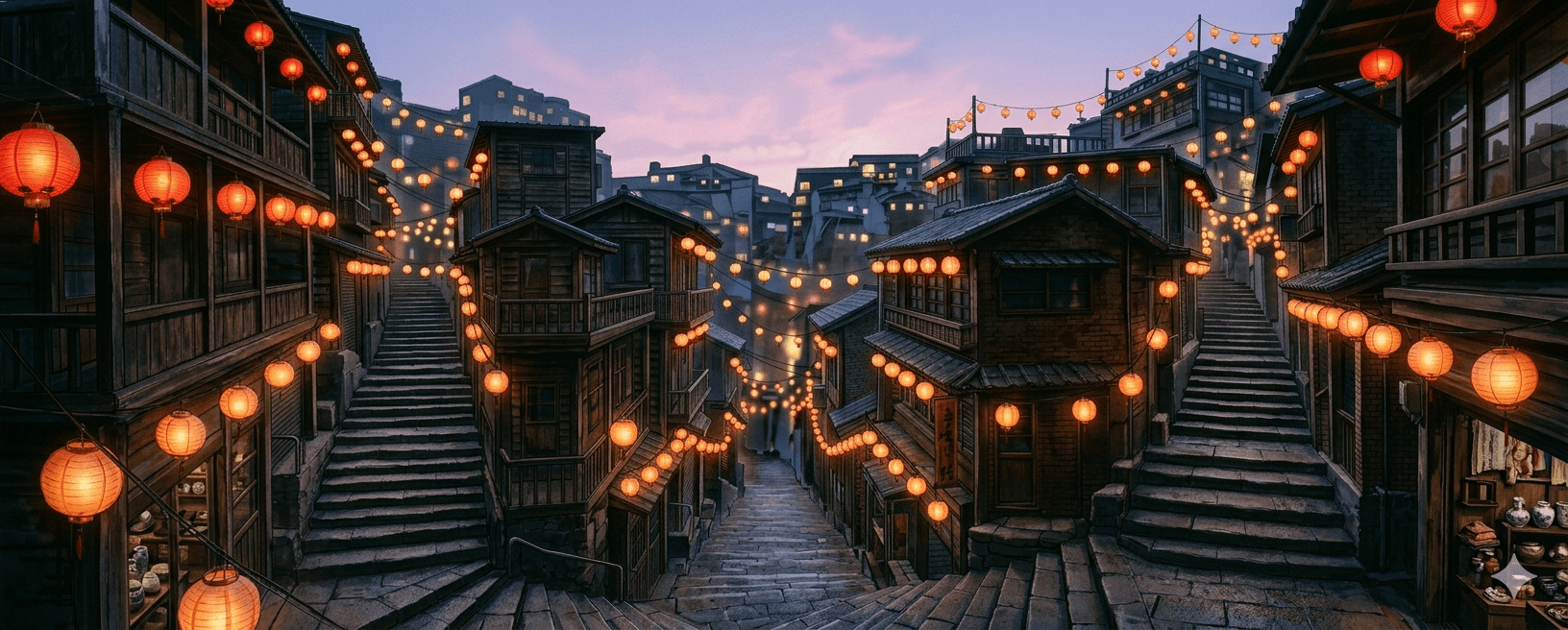
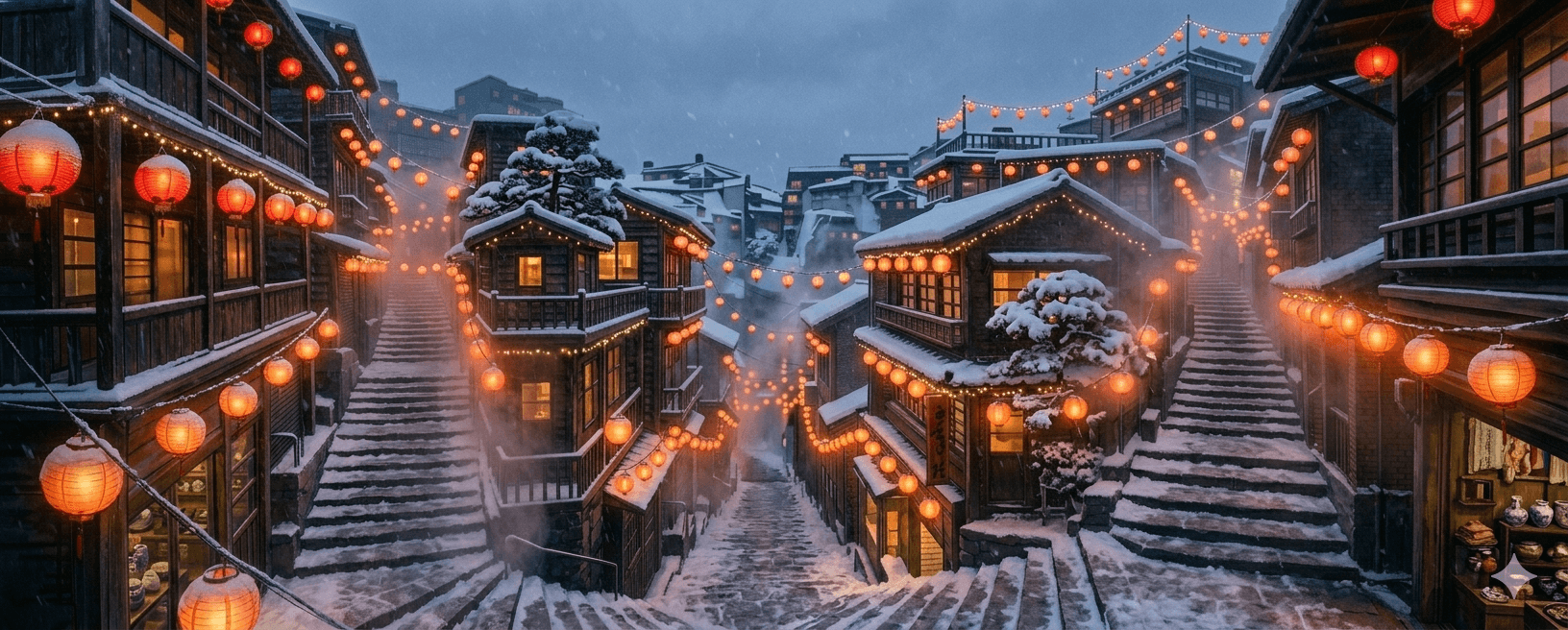
The question of which real places inspired the spirit world has fueled years of debate among fans and scholars. Jiufen, the hillside mining town in northern Taiwan, is the most popularly cited inspiration — its steep, narrow alleys lit by rows of red lanterns, its teahouses clinging to the mountainside, and its misty atmosphere on rainy evenings create a visual parallel to the spirit town that is almost uncanny. However, Studio Ghibli and Miyazaki himself have stated that Jiufen was not the direct model, calling the resemblance coincidental. The location with the strongest confirmed connection is the Edo-Tokyo Open Air Architectural Museum in Koganei, western Tokyo. Miyazaki has spoken publicly about visiting this museum and sketching its preserved Meiji- and Taisho-era buildings, and the influence is clearly visible: the Kodakara-yu bathhouse facade, with its ornate tiled roof and grand entrance, bears a striking resemblance to Yubaba's bathhouse, while the Takei Tokichi residence and several period storefronts informed the design of the spirit town's commercial district. The third major pilgrimage site is Ginzan Onsen in Yamagata Prefecture, a remote hot spring village where wooden ryokan inns line both sides of a narrow river gorge. When winter snow blankets the rooftops and gas lamps cast a warm glow through the falling flakes, the scene evokes the bathhouse district with extraordinary vividness — even though Miyazaki has never confirmed it as a source.
Pilgrimage Guide: Jiufen, Edo-Tokyo Museum, and Ginzan Onsen
Jiufen is the most accessible of the three for travelers based in Taipei. From Taipei Main Station, take a TRA train to Ruifang Station (about 40 minutes on the local train, or 30 minutes on the express). From Ruifang, catch bus No. 788 or No. 1062 to Jiufen Old Street (about 15 minutes). The best time to visit is late afternoon into evening, when the lanterns are lit and the tourist crowds have thinned slightly. The Edo-Tokyo Open Air Architectural Museum is in Koganei, a western suburb of Tokyo. Take the JR Chuo Line to Musashi-Koganei Station (about 30 minutes from Shinjuku), then catch a local bus for five minutes to the museum entrance. Allow two to three hours to explore the full collection of relocated and reconstructed historic buildings, paying special attention to the bathhouse and the merchant quarter at the rear of the grounds. Admission is just 400 yen for adults. Ginzan Onsen requires more planning and is best treated as an overnight trip. From Tokyo Station, take the Yamagata Shinkansen to Oishida Station (about 3 hours 15 minutes), then a local bus for 40 minutes to the onsen village. The village is tiny — the entire main street is only about 300 meters long — but spending a night in one of the historic ryokan, soaking in the hot springs, and walking the lantern-lit street after dark is an experience that justifies the journey. Winter (December through February) is the most magical season, when heavy snowfall transforms Ginzan into a scene that feels plucked directly from the film.
Fan Community and Cultural Legacy
Few animated films have inspired the kind of sustained, global pilgrimage culture that "Spirited Away" has generated over more than two decades. Jiufen receives millions of visitors annually, and while many come for the general atmosphere, surveys by local tourism offices indicate that a significant percentage specifically cite the film as their reason for visiting — despite the unofficial nature of the connection. The A-Mei Teahouse, Jiufen's most photographed building with its multi-story wooden facade and glowing lanterns, has become so associated with the film that it is virtually impossible to discuss one without the other. At the Edo-Tokyo Museum, the gift shop stocks Ghibli-related merchandise and the staff are accustomed to visitors asking which buildings Miyazaki sketched. Ginzan Onsen's fame has grown steadily in tandem with the film's enduring popularity, and several ryokan now display subtle nods to the connection in their decor. Beyond the pilgrimage sites, the film's cultural impact extends to theme parks — the Ghibli Park in Aichi Prefecture, which opened in 2022, includes recreations of scenes from Spirited Away — and to academic study, with university courses in film, animation, and Japanese studies regularly analyzing the film's use of Shinto mythology and environmental themes.
Food and Nearby Attractions
In Jiufen, the Old Street is a paradise of Taiwanese street food. The signature snack is taro balls (yuyuan) — chewy, colorful balls of taro, sweet potato, and tapioca served in warm or cold sweet soup, available at dozens of stalls but most famously at Ah Gan Yi and Lai Ah Po shops near the top of the street. Other favorites include stinky tofu, grilled mushrooms on skewers, peanut ice cream rolls, and the rich yu-yuan noodle soup. Pair your snack with a pot of oolong tea at one of the hillside teahouses while gazing over the misty mountains and the distant Pacific coastline. Near the Edo-Tokyo Museum in Koganei, the area is residential and quiet, but nearby Kichijoji (two stops away on the Chuo Line) offers excellent Inokashira Park — home to the Ghibli Museum (advance tickets required) — along with the famous Harmonica Yokocho alley of tiny bars and yakitori joints. At Ginzan Onsen, the culinary highlight is soba noodles, made with buckwheat flour from the surrounding Yamagata highlands and served at rustic restaurants along the main street. Yamagata is also one of Japan's premier cherry and grape-growing regions, and seasonal fruit parfaits are a local specialty. After your soak, walk to the end of the onsen valley to find a small waterfall and a forest trail that feels as mystical and ancient as anything in Miyazaki's spirit world — a fitting end to a pilgrimage that began with a ten-year-old girl walking through a tunnel into the unknown.