KPop Demon Hunters: A K-Pop Fantasy Set in Real Seoul
Released on Netflix in June 2025, "KPop Demon Hunters" is a musical fantasy animation produced by Sony Pictures Animation that follows K-pop girl group Huntrix — fierce leader Rumi, confident rapper Mira, and optimistic newcomer Zoey — who lead double lives as chart-topping superstars and secret demon hunters protecting Seoul from supernatural threats. Directed by Maggie Kang and Chris Appelhans, the film combines high-energy K-pop performance sequences with a coming-of-age story about identity, ambition, and the pressure of living up to impossible expectations. Within 75 days of its release, the film became Netflix's most-watched title of all time, surpassing every previous record in both the animated and live-action categories. It swept the Golden Globe Awards, winning both Best Animated Feature and Best Original Song (for "How It's Done"), and earned nominations in both categories at the 98th Academy Awards. The film's astonishing global success cemented K-pop's cultural influence beyond music, proving that the genre's energy, aesthetics, and storytelling could power a world-class animated feature.
Reality vs. Animation: Satellite-Data Seoul on Screen
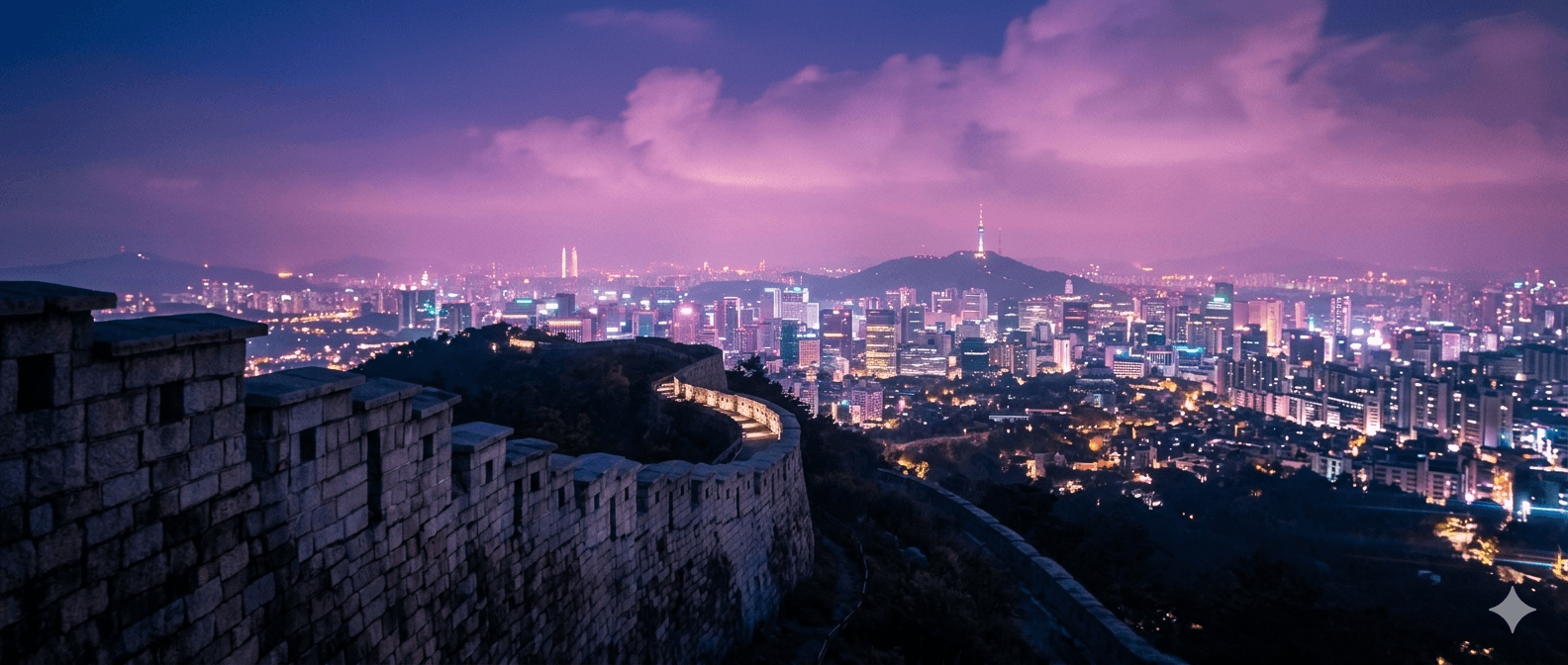
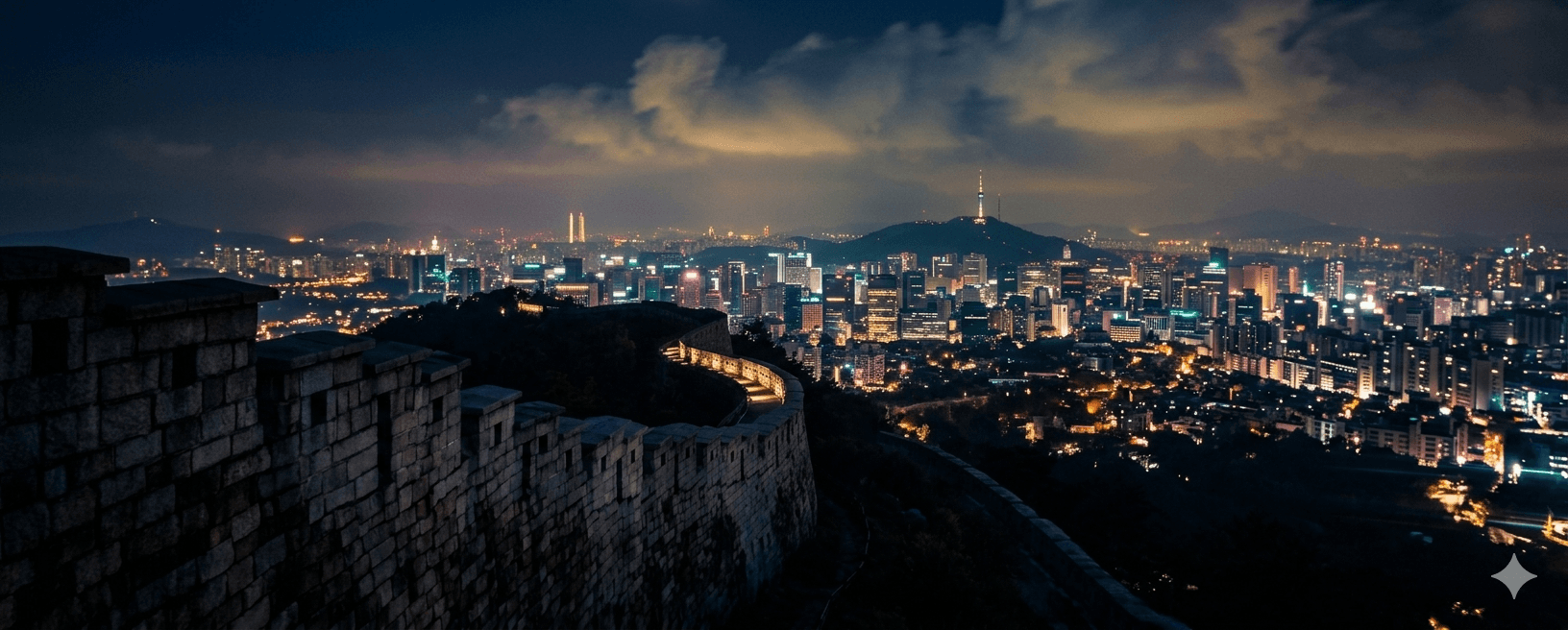
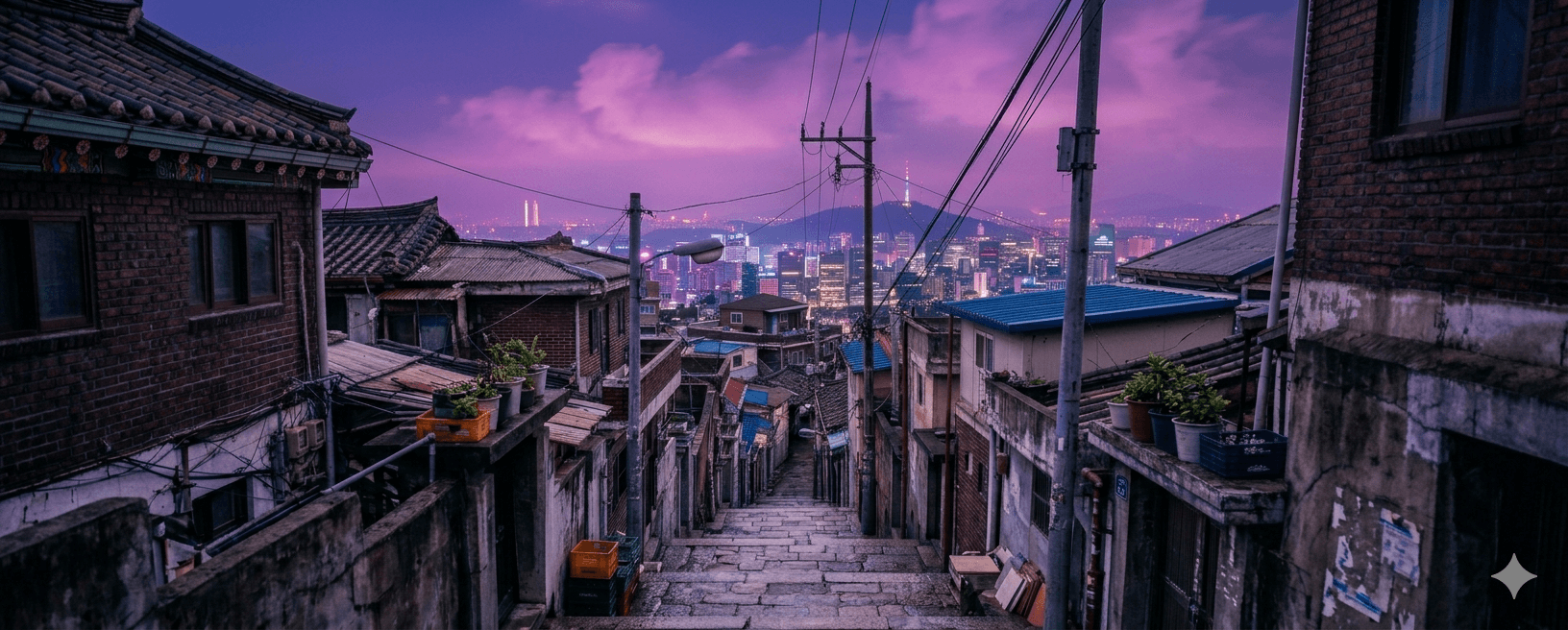
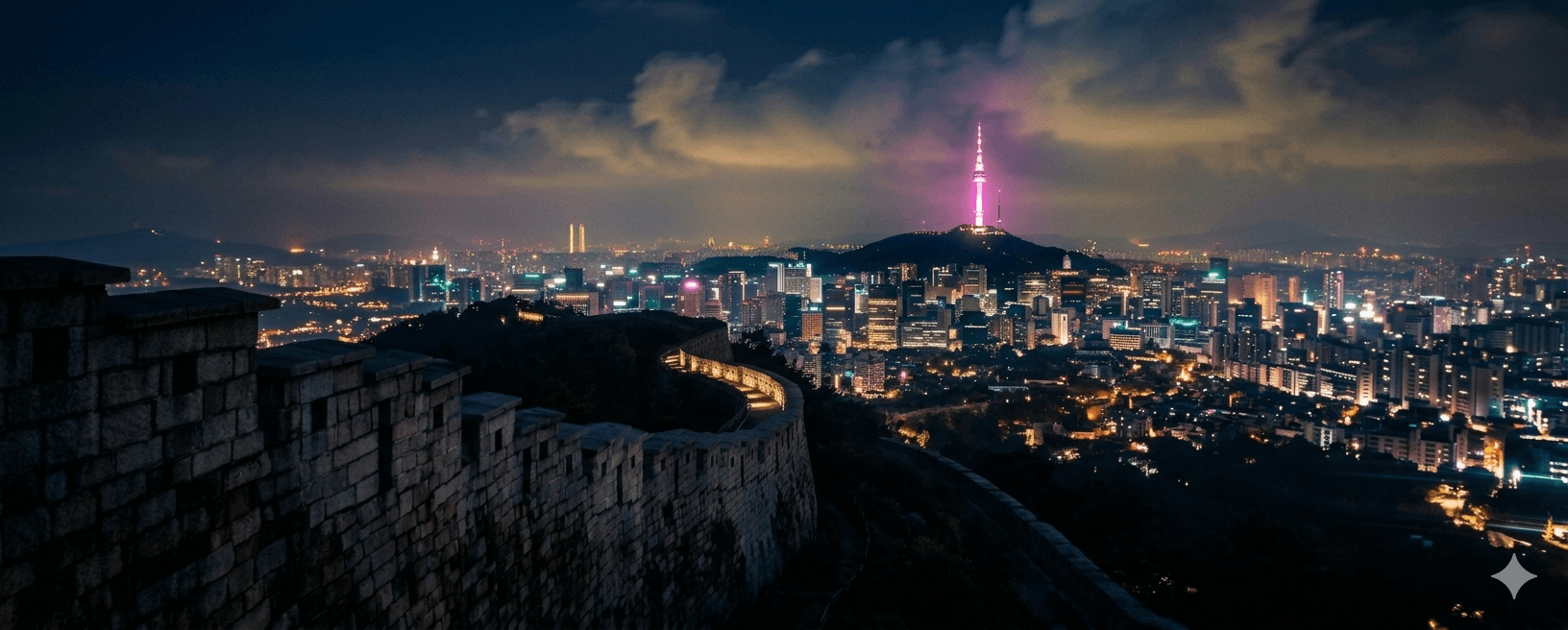
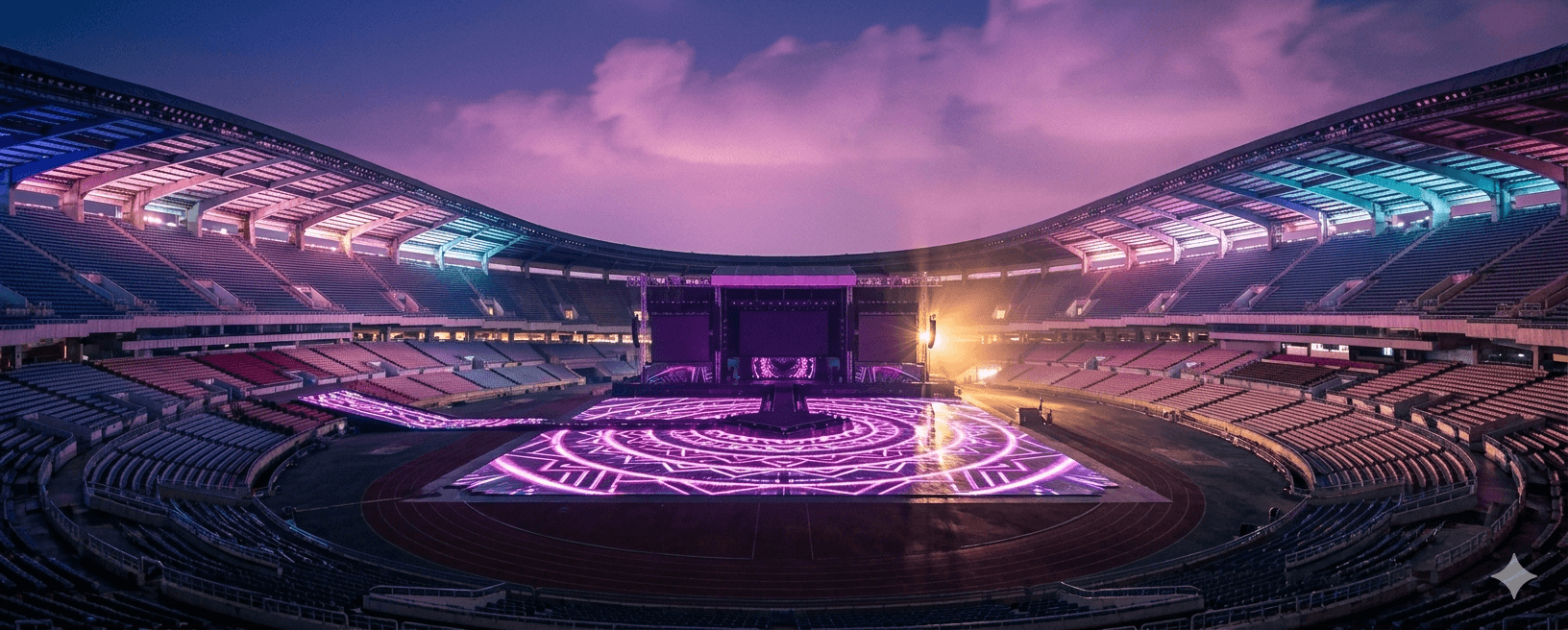
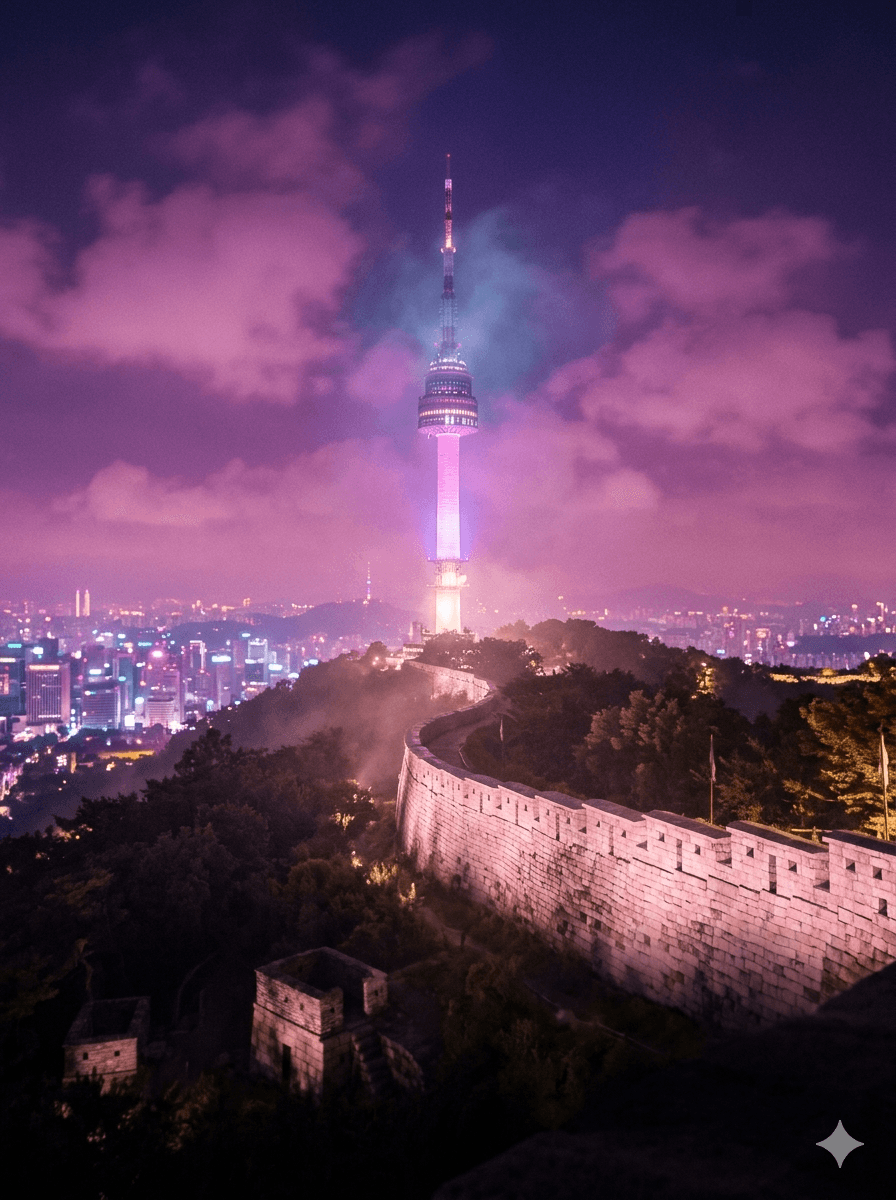
What sets "KPop Demon Hunters" apart from other animated films set in real cities is the production team's use of actual satellite and topographical data to build Seoul's digital terrain. Every hill, every curve of the Han River, every major building's footprint was modeled from real geographic information, meaning the animated Seoul is not a stylized approximation but a remarkably faithful digital twin. Naksan Park's fortress wall trail, where Rumi and Jinu share their emotional duet "Free," matches the real wall's curve, the stone texture, and the city-lights panorama visible beyond it with eerie accuracy. Bukchon Hanok Village's rooftop scene — where the duo sing atop a traditional hanok — reproduces the specific arrangement of tiled roofs, the palace walls of Gyeongbokgung visible in the distance, and the narrow alleys below. Namsan Seoul Tower appears in the climactic battle sequence, though the film imagines a pentagonal concert stadium at its base that does not exist in reality. The COEX K-POP Square intro sequence, featuring the massive 3D LED billboard unveiling a Huntrix teaser, matches the real screen's dimensions and the surrounding plaza layout almost exactly. Seoul Olympic Stadium, where the opening parachute performance takes place, is rendered with its distinctive scalloped roof and track-and-field layout intact, making each location immediately recognizable to anyone who has visited the real city.
Pilgrimage Guide: Seoul Full-Day Route (6-7 Hours)
All five key locations are within Seoul's excellent subway network, making a full-day pilgrimage entirely feasible by public transit. Start your morning at Bukchon Hanok Village: take Line 3 to Anguk Station Exit 2 and walk 10 minutes uphill into the village's traditional hanok streets. Spend about an hour exploring the alleys and photographing the rooftop views that appear in the film. From Bukchon, walk northeast for about 20 minutes (or take a short taxi ride) to Naksan Park. Enter from the Hyehwa Station (Line 4) Exit 2 side and follow the Hanyangdoseong Fortress Wall trail — the exact path from the "Free" scene. This section is best visited at sunset or after dark, when the Seoul skyline glows exactly as it does in the film. The trail walk takes about 30 to 40 minutes. Next, head to Namsan Seoul Tower: take Line 4 to Myeongdong Station Exit 3 and catch the Namsan Cable Car to the summit, or hike the 20-minute trail from the cable car base. Allow about an hour for the tower observation deck and photo opportunities. After descending, take the subway to COEX K-POP Square: ride Line 2 to Samsung Station Exit 5, which connects directly to the underground COEX Mall. The giant outdoor LED screen is at the corner of the building facing the intersection. Finally, continue on Line 2 to Sports Complex Station Exit 1 for the Seoul Olympic Stadium, a 5-minute walk from the exit. The entire route covers about 6 to 7 hours including transit and photo time.
Fan Community: Seoul's Official Pilgrimage
The film's impact on Seoul tourism has been extraordinary. The Seoul Metropolitan Government published an official KPop Demon Hunters pilgrimage guide — a first for an animated film — distributed at major tourist information centers and available as a downloadable PDF in Korean, English, Japanese, and Chinese. Naksan Park, previously a beloved local spot but not a major international tourist destination, saw foreign visitor numbers surge dramatically in the months after the film's release, with the fortress wall trail becoming one of the most photographed locations in Seoul on Instagram and TikTok. Local businesses along the trail began offering themed merchandise — "Free" lyric postcards, Huntrix fan art prints, and fortress-wall-view cafe sets. At COEX K-POP Square, the LED screen periodically plays the film's trailer during its rotation of K-pop content, and fans gather to film the exact moment the Huntrix teaser appears, recreating the film's intro sequence. Korean tourism agencies report that "KPop Demon Hunters" has become the single most-cited reason for visiting Seoul among first-time visitors from North America and Europe under the age of 30, a demographic shift that has prompted the Korean Tourism Organization to prominently feature the film's locations in its international campaigns. A sequel targeting 2029 release has been confirmed, and speculation about which new Seoul locations it might feature has already begun among fan communities.
Food and Nearby Attractions
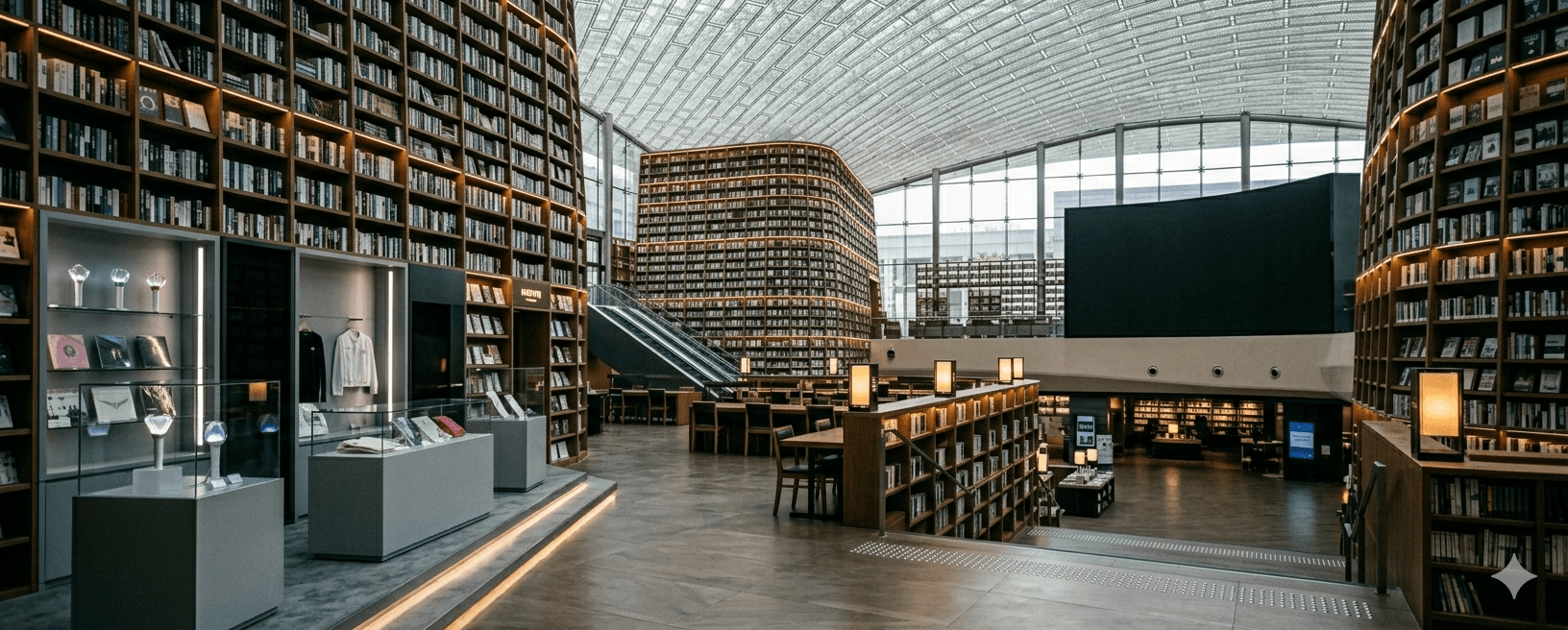
The pilgrimage route passes through some of Seoul's best neighborhoods for food and sightseeing. Near Bukchon, the Samcheong-dong area is a charming district of independent cafes, galleries, and boutiques tucked into renovated hanok houses — perfect for a morning coffee and a fresh hotteok or injeolmi toast from a street vendor. Walking downhill from Bukchon toward Anguk Station, you will pass the entrance to Insadong, Seoul's traditional culture street, where tea houses serve ceremonial matcha and yujacha (citron tea) alongside handmade rice cakes. Near Naksan Park, the Ihwa Mural Village — a hillside neighborhood decorated with street art — makes a wonderful add-on to the fortress wall walk, and the surrounding Daehangno theater district offers affordable Korean dining. In the Myeongdong area near Namsan, the streets are packed with Korean cosmetics shops and street food: egg bread, tornado potato skewers, mozzarella corn dogs, and tteokbokki are all available from vendors lining the main pedestrian avenue. At COEX, the underground Starfield Library — a stunning open atrium with floor-to-ceiling bookshelves — is worth a visit between location scouting, and the surrounding Gangnam district offers everything from high-end Korean BBQ to trendy brunch spots. Near the Olympic Stadium, the adjacent Lotte World theme park and the lakeside Seokchon Lake (famous for its cherry blossoms in April) round out a full day of sightseeing that combines the magic of the film with the best of what Seoul has to offer.