RealScene
Train to Busan
Movie

Train to Busan

Follow the route of Train to Busan and discover the real train stations and filming locations of this thrilling zombie blockbuster.

July 20, 2016 Yeon Sang-ho South Korea 3 Published: February 8, 2025
HorrorActionDrama

Train to Busan: Horror on the Rails

Train to Busan (2016) is the film that proved Korean cinema could reinvent any genre. Directed by Yeon Sang-ho — an animator making his live-action debut — the movie traps fund manager Seok-woo (Gong Yoo) and his young daughter Su-an (Kim Su-an) aboard a KTX high-speed train from Seoul to Busan as a mysterious virus turns passengers into ravenous zombies one car at a time. What begins as a routine father-daughter trip becomes a desperate, car-by-car fight for survival alongside a pregnant couple, a high-school baseball team, and a ruthless corporate executive whose selfishness proves as deadly as the infected. The film drew 11.56 million viewers domestically, making it the highest-grossing Korean film of 2016, and its midnight premiere at the Cannes Film Festival earned a seven-minute standing ovation that launched it to global cult status. Beneath its breathless action set pieces lies a razor-sharp social commentary about class, sacrifice, and the moral choices people make when civilization collapses — themes that resonated powerfully with audiences worldwide and elevated the film far beyond standard zombie fare.

Behind the Scenes: Building Horror on a Moving Train

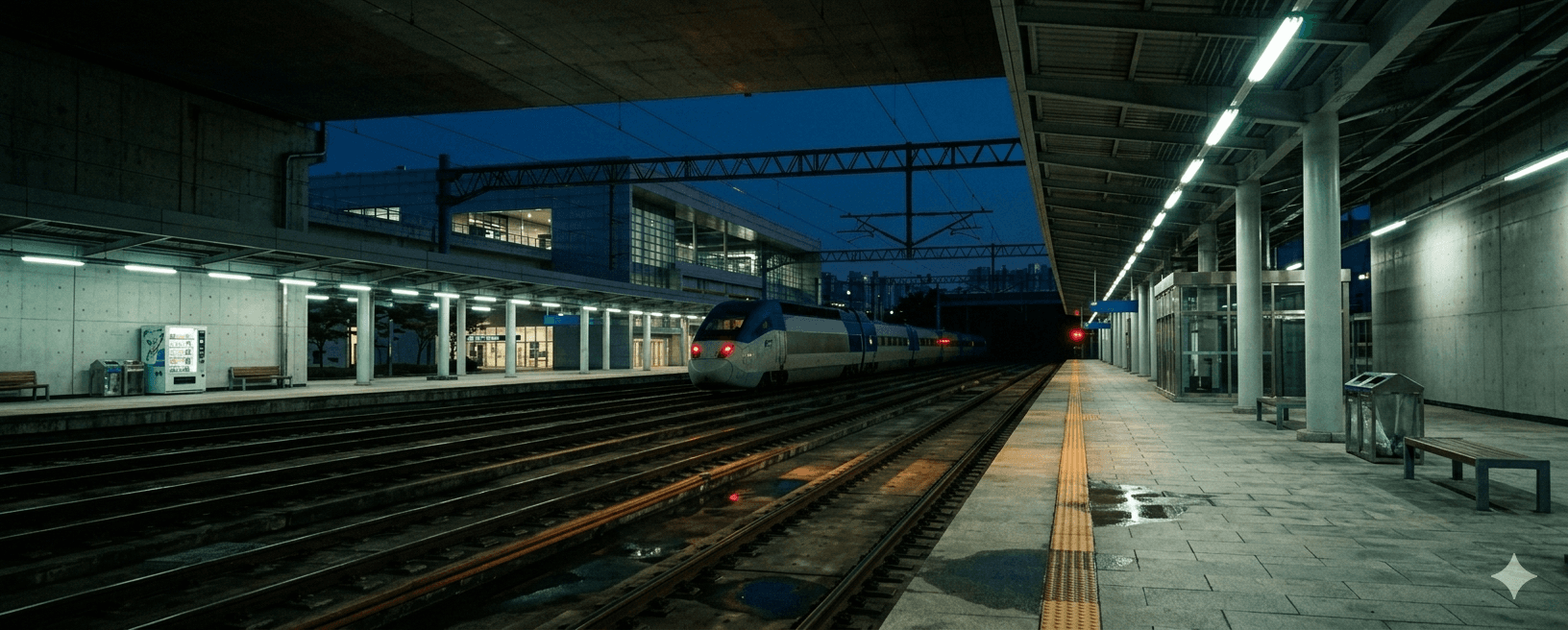
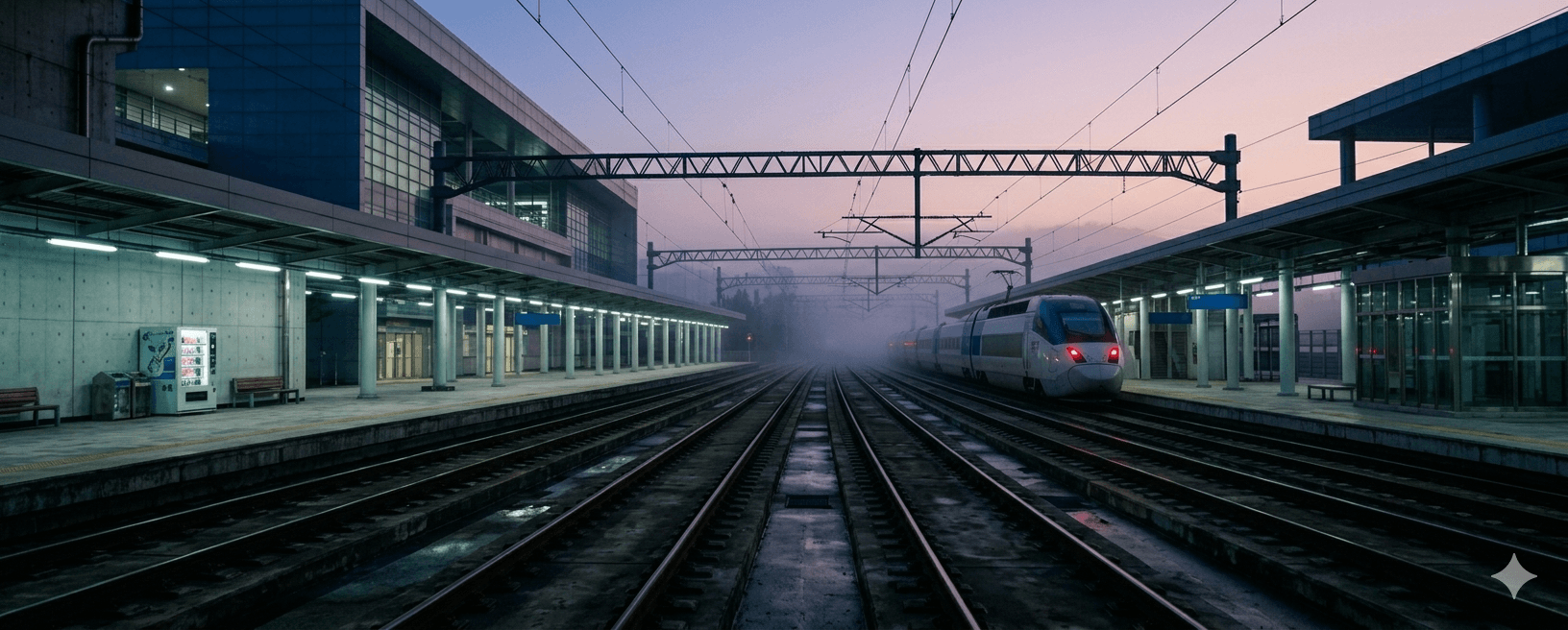
The production's greatest technical challenge was creating convincing KTX train interiors. The crew constructed full-scale replicas of KTX cars in a Goyang studio, mounted on hydraulic rigs that simulated the rocking motion of a real high-speed train. Each car was designed with removable walls to allow camera movement, and cinematographer Lee Hyung-deok developed a handheld shooting style that placed viewers directly in the claustrophobic corridors. The zombie transformation sequences required a dedicated team of over sixty makeup and prosthetics artists, who developed a signature look — contorted limbs, blackened veins, clicking jaws — that has since become iconic in global zombie media. Director Yeon Sang-ho, drawing on his animation background, storyboarded every major action sequence in detail before shooting, which allowed the crew to execute the complex multi-car chase scenes with remarkable efficiency. The station sequences were filmed at actual KTX stations during overnight hours when the platforms were clear of passengers, with the Daejeon Station zombie horde scene requiring over 300 extras and two full nights of shooting. The film's emotional core — the relationship between Seok-woo and Su-an — was anchored by young actress Kim Su-an, whose audition reportedly moved Gong Yoo to tears and convinced him to sign onto the project.

Travel Guide: Riding the KTX Route from Seoul to Busan

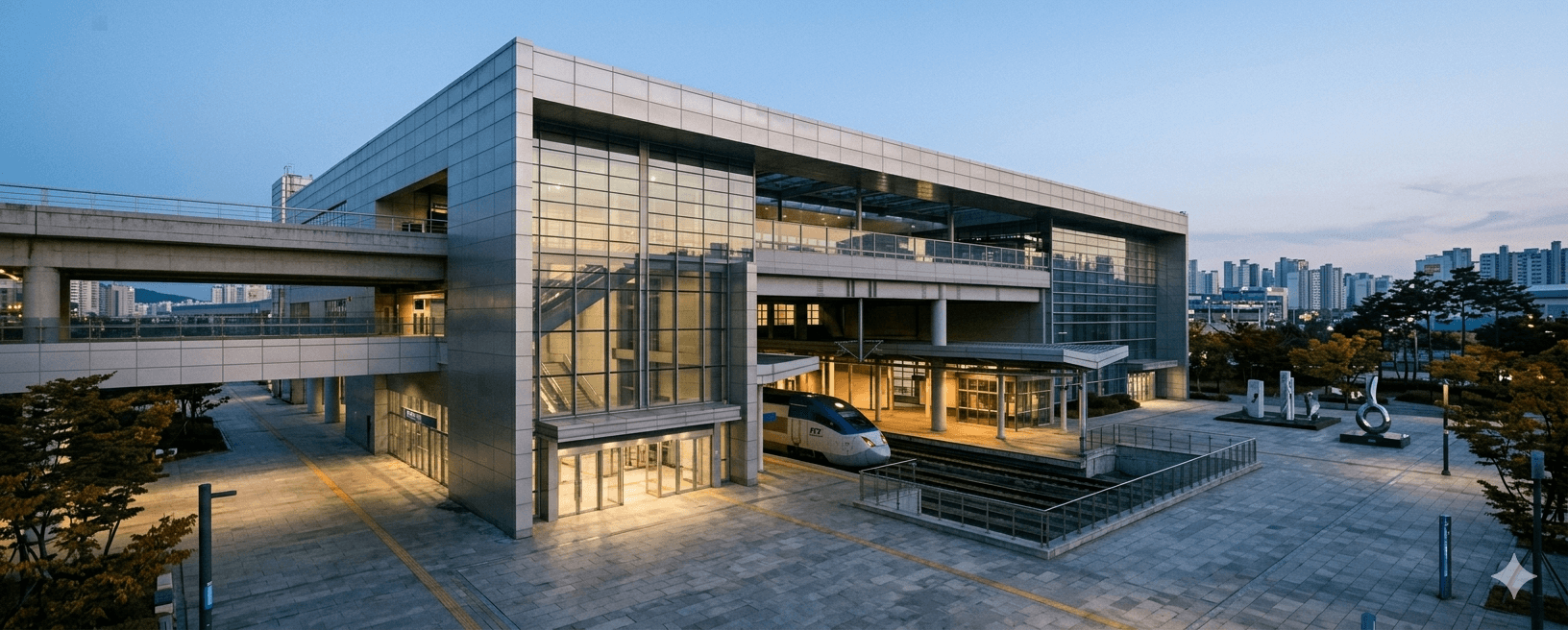
One of the most rewarding ways to experience Train to Busan as a fan is to ride the actual KTX route the characters travel. Trains depart from Seoul Station roughly every 15 to 30 minutes throughout the day, and the full journey to Busan Station takes approximately 2 hours and 30 minutes. The first major stop is Cheonan-Asan Station, a sleek, modern stop about 40 minutes south of Seoul, where the film's pivotal betrayal scene takes place. The station sits in a relatively quiet suburban area, so there is not much to explore on foot, but KTX passengers can look out the window and imagine the chaos that unfolded here on screen. The next key stop is Daejeon Station, roughly 50 minutes from Seoul, located in the heart of Daejeon's downtown. This is where the film's most intense platform battle erupts, and the station's wide, open concourse is immediately recognizable to fans. Daejeon is worth a stopover in its own right — the city is home to excellent bakeries and the famed Seongsimdang, widely considered one of Korea's best bakeries, known for its tuigim soboro (deep-fried crumble bread) and baguette rolls. The final destination is Busan Station, accessible via Busan Metro Line 1 or by simply stepping off the KTX. The station opens directly onto Busan's Jung-gu district, and from the platforms you can gaze toward the harbor and mountains that the film's survivors were so desperate to reach.

Fan Pilgrimages

Train to Busan has an enduring global fandom that treats the KTX route itself as a pilgrimage. International visitors frequently photograph themselves boarding the KTX at Seoul Station, mimicking the opening scenes, and post their journey in real time on social media with hashtags like #TrainToBusanRoute. At Busan Station, fans gather near the arrivals area to take photos at the spot where the final, emotionally devastating scenes take place. The film's influence extends beyond tourism — it revived international interest in Korean horror cinema, paved the way for a sequel (Peninsula, 2020) and a Hollywood remake deal, and inspired theme park attractions at Everland and seasonal zombie runs in multiple Korean cities. Korean film buff communities organize annual "KTX movie marathons" where participants watch Train to Busan on tablets while riding the actual train, timing each scene to match the real-life station stops. The film also put Gong Yoo on the global map as a leading man, directly contributing to the international success of his next project, the drama Goblin, which aired later the same year.

Food and Nearby Attractions

Each station along the route offers distinct culinary and sightseeing opportunities. At Seoul Station, the adjacent Namdaemun Market — Korea's oldest and largest traditional market — is a paradise of street food, including hotteok (sweet pancakes), kalguksu (knife-cut noodle soup), and fresh mandu (dumplings) at stalls that have operated for generations. In Daejeon, Seongsimdang Bakery near Daejeon Station has been a local institution since 1956 and draws lines out the door for its signature breads; the surrounding Eunhaeng-dong neighborhood offers charming cafes and vintage shops. Upon arrival in Busan, the city unfolds as one of Korea's greatest food destinations. Head to Jagalchi Fish Market, a ten-minute walk from Busan Station, for the freshest raw fish (hoe) and grilled shellfish in the country — the market's ground floor is a bustling wholesale operation while the upper floors house sit-down restaurants where your fish is sliced to order. Nearby BIFF Square in Nampo-dong serves legendary ssiat hotteok (seed-filled sweet pancakes) and odeng skewers. For sightseeing, take the subway to Haeundae Beach for the city's iconic coastline, ride the Songdo Marine Cable Car for aerial views of the rocky shore, or walk the cliffside path at Haedong Yonggungsa Temple, one of Korea's few seaside Buddhist temples. The entire Busan experience makes a fitting end to a journey that began with terror on the tracks and ends with some of the best food and scenery the Korean peninsula has to offer.

📍 Filming Locations

1

부산역

부산 동구 중앙대로 206

영화의 최종 목적지이자 생존자들이 도착하는 부산역 장면

KTX 부산역 하차

35.1152, 129.0412

View on Map

Google Maps

Search nearby hotels
2

대전역

대전 동구 중앙로 215

KTX가 대전역에 정차하면서 본격적인 혼란이 시작되는 긴장감 넘치는 장면

KTX 대전역 하차

36.3326, 127.4346

View on Map

Google Maps

Search nearby hotels
3

천안아산역 (KTX 정차 장면)

충남 아산시 배방읍

열차가 중간 정차하며 승객들의 불안이 고조되는 장면이 촬영된 역

KTX 천안아산역 하차

36.7949, 127.1046

View on Map

Google Maps

Search nearby hotels

🧳 Plan Your Trip

🎬 Related Works