When Life Gives You Tangerines: A Lifetime Walked Across Jeju
Released on Netflix on March 7, 2025, When Life Gives You Tangerines (Korean title Pokssak Sogatsuda) is a 16-episode period drama written by Im Sang-choon and directed by Kim Won-seok. IU (Lee Ji-eun) and Park Bo-gum play the young Ae-sun and Gwan-sik, while Moon So-ri and Park Hae-joon carry the couple into middle age. Together they trace one woman's entire life on Jeju Island — from the 1950s to the 2000s — and the steadfast love of the man who stayed beside her. The title is a Jeju dialect phrase meaning roughly "you've worked so hard," a gentle word of comfort offered to everyone who has endured a difficult life.
The series became a phenomenon almost immediately. It topped Netflix's chart in South Korea and then climbed to number one on the global Top 10 for non-English series, holding a Top 10 spot for eight consecutive weeks. Made on a budget of around 60 billion won, it weaves the scars of the Jeju April 3rd tragedy, poverty, and the quiet inheritance passed between generations into a lyrical family epic. It won the Grand Prize at the 2025 New Media Content Awards and was named one of TIME magazine's best Korean dramas of the year. In the months that followed, the drama's real filming locations across Jeju — and one surprising spot on the mainland — became a fresh pilgrimage route for fans.
Behind the Scenes
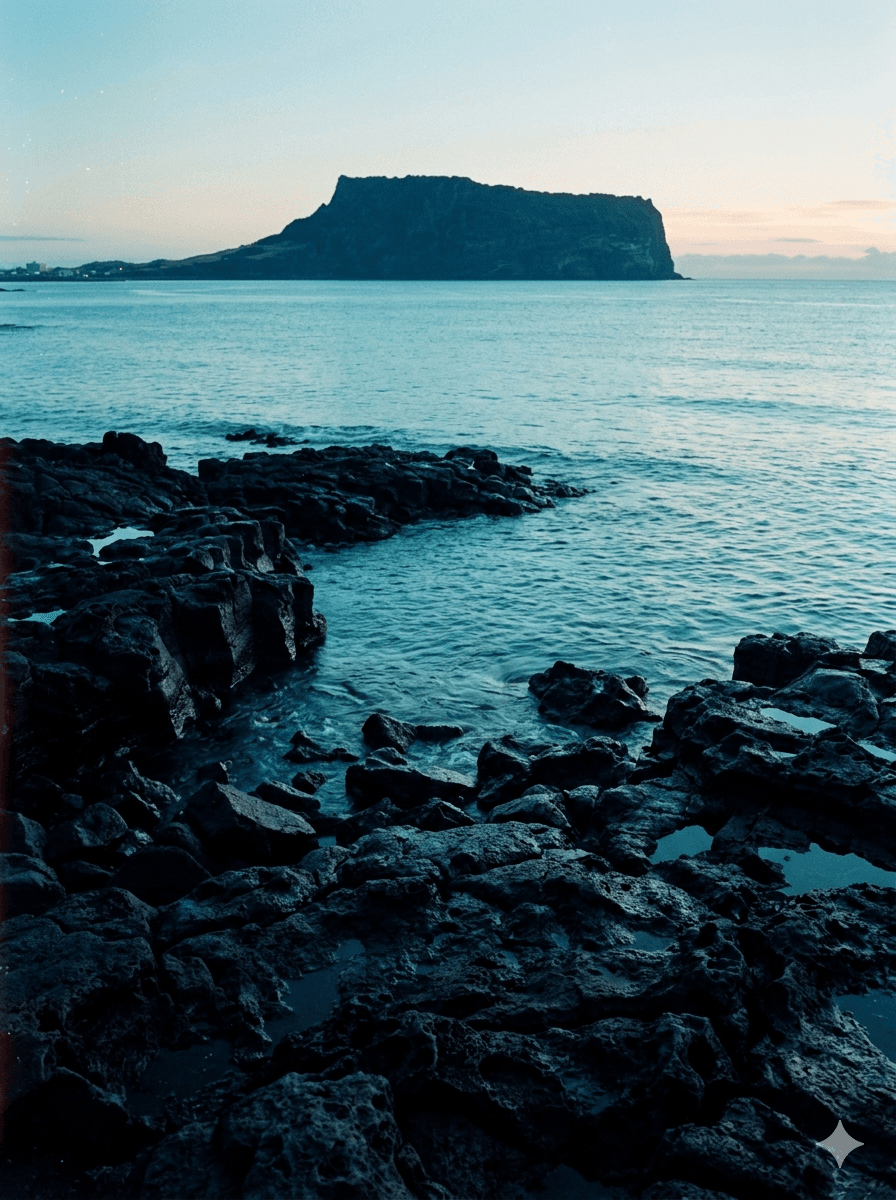
Rather than lean on soundstages, the production traveled across Jeju to capture the island's landscapes and old downtown as they really are. Seongsan Ilchulbong, the towering tuff cone that rises straight out of the sea, serves as the setting for the scene in which Ae-sun steels herself and offers three thousand bows. The silhouette of the crater against the ocean — unmistakably Jeju — needed no embellishment on camera.
Jeju Mokgwana, a restored Joseon-era government office in the heart of the old city, becomes the venue for the drama's poetry contest. Here Ae-sun, who dreamed of becoming a poet, pours her longing for her mother into verse while Gwan-sik keeps watch nearby. Many viewers point to this quiet courtyard scene as the emotional heart of the entire series. The seaside sequences, meanwhile, were shot at Gimnyeong Seongsegi Beach on Jeju's northeast coast, where Ae-sun's mother and the other haenyeo divers walk into the water to begin their day's work.
One of the show's most talked-about surprises is that the vast green field where Ae-sun and Gwan-sik share their first kiss is not on Jeju at all — it is Borinara Hagwon Farm in Gochang, North Jeolla Province. Each spring, roughly one million square meters of barley turn a shimmering green here, and the farm stood in for Jeju's canola and barley fields to capture the couple's most heart-fluttering moment. Fans have also identified the Ora-dong buckwheat fields in Jeju City's mid-mountain area as the backdrop for the drama's lingering final walk, where the two characters stroll side by side.
Travel Guide to Filming Locations
Suggested one-day eastern Jeju route: Gimnyeong Seongsegi Beach → Jeju Mokgwana (old downtown) → Seongsan Ilchulbong.
- Seongsan Ilchulbong is a UNESCO World Natural Heritage site with an admission fee (around 5,000 won for adults). Climbing at sunrise rewards you with the same majestic view seen in the drama; the round-trip walk to the summit takes about an hour.
- Jeju Mokgwana sits in the walkable old town, so it pairs easily with the nearby Dongmun Market. A small admission fee lets you explore Gwandeokjeong pavilion and the reconstructed office buildings.
- Gimnyeong Seongsegi Beach is free to enter and open for swimming in summer, with strikingly clear emerald shallows that make it a lovely walk in any season.
- Borinara Hagwon Farm (Gochang) is the mainland stop. It is at its best in April and May, when the green barley peaks, and again in autumn for buckwheat and sunflowers. It is about 3 hours 30 minutes from Seoul by express bus.
The best time to visit overall is April–May, when barley and canola bloom together, and early summer, when Jeju's waters are clearest.
Fan Pilgrimages
After the series aired, social media filled with check-in photos tagged #WhenLifeGivesYouTangerines, #SeongsanIlchulbong, and #GochangBarleyField. The Gochang farm in particular drew a wave of spring visitors thanks to the twist that "it looked like Jeju but was actually North Jeolla," a reveal that Korean travel blogs and news outlets covered widely.
Popular photo spots include the view over the sea from the summit of Seongsan Ilchulbong, character portraits in the courtyard of Jeju Mokgwana, and silhouette shots against the emerald water at Gimnyeong Beach. Riding the drama's success, the Jeju Tourism Organization and local governments have expanded signage and promotion around these sites, folding them into the island's official tourism offerings.
Nearby Food and Attractions
- Around Seongsan: Gwangchigi Beach and Seopjikoji are a short walk or drive from Seongsan Ilchulbong, and Seongsan Port is known for fresh seafood, sweet shrimp, and hairtail dishes.
- Jeju old downtown: A short walk from Jeju Mokgwana, Dongmun Traditional Market is the place for local specialties like omegi rice cakes, black pork, and hoe-guksu (raw-fish noodles).
- Gujwa and Gimnyeong: The coastal road near Gimnyeong Beach is lined with ocean-view cafes, and the area connects well with Manjanggul Cave and the Bijarim forest on an eastern-Jeju circuit.
- Gochang: Combine Hagwon Farm with Sanghah Farm, Seonunsa Temple, and the UNESCO-listed dolmen sites for a full day on the mainland.
- Where to stay: Eastern Jeju around Seongsan and Gujwa offers everything from resorts to guesthouses, so book according to your route.