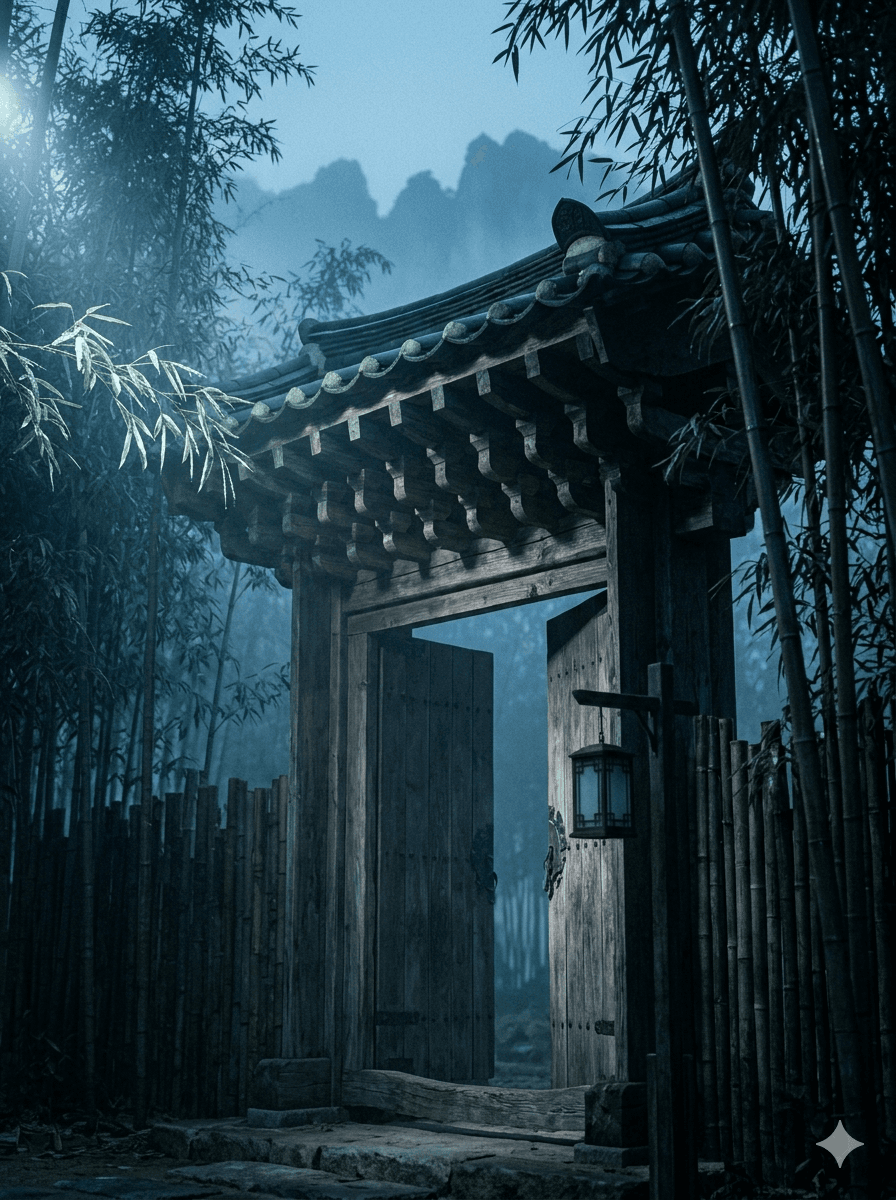
To My Beloved Thief, a Joseon Romance Where a Thief and a Prince Swap Souls
To My Beloved Thief (은애하는 도적님아) aired on KBS2 as a Saturday–Sunday miniseries from January 3 to February 22, 2026, running for 16 episodes. Directed by Ham Young-geol and written by Lee Sun, it stars Nam Ji-hyun as Hong Eun-jo, an ordinary young woman by day who moonlights as the righteous outlaw known as "Hong Gil-dong," and Moon Sang-min as Yi Yeol, Grand Prince Dowol, the royal tasked with hunting her down. Hong Min-gi (Im Jae-yi) and Han So-eun (Shin Hae-rim) round out the central quartet.
The hook is a body swap. One night a mysterious bracelet, handed to them by a young monk, trades the souls of the pursuer and the pursued. Forced to live inside each other's lives, the thief and the prince come to understand the weight the other carries: the risks of a commoner who steals for the poor, and the loneliness of a royal bound by duty. The mix of class-crossing romance, cat-and-mouse tension and body-swap comedy proved a comfortable fit for weekend primetime. According to Nielsen Korea, the series averaged 6.5% nationwide and peaked at 7.7% with episode 15 on February 21, 2026.
For viewers outside Korea, the premise may ring a bell: Hong Gil-dong is Korea's Robin Hood, the hero of a classic Joseon-era novel, and the show borrows that legend to give its heroine a secret identity. Nam Ji-hyun, known internationally for Suspicious Partner and Little Women, essentially plays two characters at once, while Moon Sang-min was billed before the premiere as the new "MZ-generation" leading man of period dramas.
What makes the show especially interesting for travelers, though, is where it was made. Rather than relying on a single studio backlot, the production spent most of a year moving between real heritage houses, pavilions and mountains in Gyeongsangnam-do Province. That is why To My Beloved Thief filming locations continue to draw searches long after the finale, and why the show doubles as a ready-made itinerary for South Gyeongsang's hanok country.
Behind the Scenes
According to the Gyeongsangnam-do provincial government, the crew filmed the drama in the province for about eight months, from March to November 2025. The province named four main locations: Choi Champan House in Hadong, built to film Park Kyong-ni's epic novel Toji (The Land); Ildu House in Hamyang, a designated National Folklore Heritage; Sameunjeong in Miryang, noted for its old-world pavilion and beautiful pond; and Hwangmaesan in Hapcheon, where you can feel the vastness of the Sobaek mountain range.
The Gyeongnam Culture and Arts Foundation supported the long location shoot with roughly 35 million KRW for lodging and transportation. The province said the crew's extended stay boosted local spending on accommodation and food, and that it expected the broadcast to promote regional landmarks nationwide. Because the production moved between real cultural heritage sites instead of one set, the curve of a tiled roof, the reflection in a pavilion pond and the line of a mountain ridge you see on screen are places you can actually visit.
Each site plays a distinct role. Choi Champan House supplies a Joseon village landscape where tiled-roof mansions sit beside thatched cottages. Ildu House, with its tall gate and men's quarters, conveys the dignity of a noble household. Sameunjeong's square pond and rare trees create a lyrical garden for quieter romantic moments, and Hwangmaesan's high plateau delivers the open hills and fields through which the thief roams. Closer to Seoul, Korean outlet The Fact reported that the drama also filmed at Jejumok Bridge in the Korean Folk Village in Yongin, a wooden bridge nicknamed "the bridge where four seasons stay" because its scenery changes so dramatically through the year.
Travel Guide to the Filming Locations
The locations fall into three clusters: western Gyeongnam (Hadong, Hamyang, Hapcheon), eastern Gyeongnam (Miryang) and the Seoul capital area (Yongin). Rural Gyeongnam has infrequent buses, so a rental car is by far the easiest way to link the sites.
- Western Gyeongnam, 2 days / 1 night: Choi Champan House in Hadong → (about 1 hour by car) Ildu House and Gaepyeong Hanok Village in Hamyang → overnight → Hwangmaesan in Hapcheon. Choi Champan House is about 20 minutes by taxi from Hadong Bus Terminal and is open daily 09:00–18:00 according to the Korea Tourism Organization; children 7 and under, seniors 65+ and Hadong residents get in free. Ildu House is about 15 minutes by taxi from Hamyang Intercity Bus Terminal and charges no admission.
- Hwangmaesan: The county park entrance is at 331 Hwangmaesangongwon-gil, Gahoe-myeon, Hapcheon-gun, about 40 minutes by car from Hapcheon Bus Terminal. Parking costs 4,000–5,000 KRW for a car depending on the season. You can drive up close to the plateau below the 1,108 m summit, so even a short visit rewards you with wide views.
- Miryang day trip: From Miryang KTX Station it is roughly a 25-minute drive to Sameunjeong, tucked inside the Toero-ri heritage village. It is privately owned, so access may be limited; call Miryang City's Culture and Arts Division (055-359-5639) before you go.
- Half day from Seoul: The Korean Folk Village is about 55 minutes from Suwon Station on bus 37 or 10-5, or around 10 minutes by taxi from Sanggal Station on the Suin-Bundang Line. Adult tickets are in the 30,000s KRW and change by season, so check koreanfolk.co.kr.
There are two ideal windows. In early May, Hwangmaesan's royal azaleas turn the plateau pink; from mid-October to early November, silver grass on the mountain and autumn leaves in the hanok courtyards line up beautifully. Since filming ran from spring to late autumn, you will find a scene-matching landscape almost any time of year.
Fan Pilgrimage
The first stop for most fans is Ildu House in Hamyang. Already famous as Go Ae-shin's family home in Mr. Sunshine, it has now become a period-romance set twice over, making it a "double pilgrimage site" for fans of both shows. The signature shot frames the inner men's quarters through the tall front gate. Remember that Gaepyeong is a lived-in hanok village: don't photograph over walls into private homes, and keep your voice down.
At Choi Champan House, the favorite angle looks down from the raised floor of the men's quarters over the Pyeongsa-ri fields and the Seomjin River. At Sameunjeong, fans capture the pavilion together with its reflection from the pond's edge, and on Hwangmaesan a silhouette against the ridgeline at sunset recreates the mood of Hong Eun-jo, the thief who roams the mountains.
On social media, look for #ToMyBelovedThief, #은애하는도적님아 and #은애하는도적님아촬영지 to find visit reports. These are heritage spaces, so follow posted guidance before stepping onto wooden floors or opening doors. Renting a hanbok before your visit is a popular way to step into the drama's world, especially for photos at the gates and pavilions.
Nearby Food and Attractions
- Hadong: Pair Choi Champan House with Hwagae Market, the cherry-blossom road to Ssanggyesa Temple and Hadong's green-tea fields. Try jaecheop-guk (Seomjin River marsh-clam soup) and freshwater crab stew. The Choi Champan House hanok hotel lets you stay overnight in the same atmosphere.
- Hamyang: About ten minutes by car from Ildu House, Sangnim Forest is a thousand-year-old woodland said to have been planted by Silla scholar Choe Chi-won. Namgye Seowon, part of the UNESCO World Heritage "Seowon, Korean Neo-Confucian Academies," and Hamyang black pork are worth adding.
- Hapcheon: Combine Hwangmaesan with Haeinsa Temple, home of the Tripitaka Koreana, and the Hapcheon Film Theme Park for a full day of historical and period-drama sets.
- Miryang: Wiyangji Pond, near Sameunjeong, is a photo hotspot in May when the white fringe trees bloom; also visit Yeongnamnu Pavilion and try Miryang's pork-and-rice soup (dwaeji gukbap).
- Yongin: Enjoy traditional snacks at the market inside the Korean Folk Village, then continue to Everland or Suwon's Hwaseong Fortress.
- Where to stay: For the western Gyeongnam loop, hanok stays in Hadong or Hamyang suit the drama's mood; for Miryang, hotels near Miryang Station are the most convenient.