RealScene
Parasite
Movie

Parasite

Discover the real filming locations of Parasite, the Academy Award-winning film by Bong Joon-ho. From the semi-basement to the grand mansion.

May 30, 2019 Bong Joon-ho South Korea 3 Published: January 15, 2025
ThrillerDramaBlack Comedy

Parasite: The Architecture of Class Divide

Bong Joon-ho's Parasite (2019) is a landmark in world cinema that redefined what a foreign-language film could achieve on the global stage. The film swept the Palme d'Or at the 2003 Cannes Film Festival, becoming the first South Korean film to do so, before going on to claim four Academy Awards — Best Picture, Best Director, Best Original Screenplay, and Best International Feature Film. That Best Picture win was historic: Parasite became the first non-English-language film ever to receive Hollywood's top honor in the award's 92-year history. Back home, the film drew over 10 million viewers in Korean theaters, while its worldwide gross surpassed $266 million, a staggering figure for a subtitled thriller with no Hollywood stars.

What makes Parasite so remarkable is how director Bong spent seven years developing the story, refining a deceptively simple premise — two families, one rich and one poor, whose lives become entangled — into a razor-sharp social satire that resonates across cultures. The film's vertical spatial design, moving from the cramped semi-basement home of the Kim family up to the sunlit hilltop mansion of the Parks and then down into a hidden bunker, creates a physical map of class inequality that audiences worldwide understood instinctively. The cultural impact was enormous: "semi-basement" became an internationally recognized term, South Korean inequality entered global discourse, and film schools began teaching Parasite as a masterclass in genre-blending storytelling.

Behind the Scenes

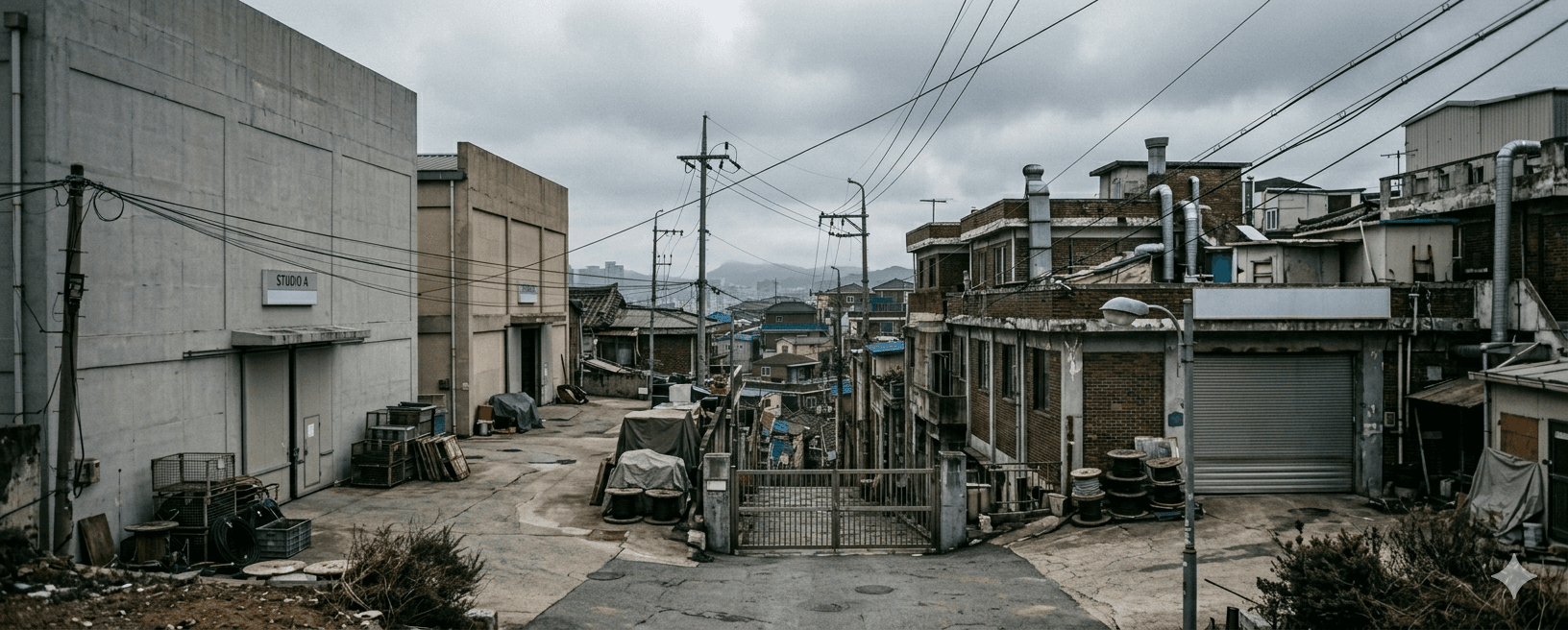
Production designer Lee Ha-jun delivered one of the most ambitious feats of set construction in Korean cinema history. The Park family mansion — that sprawling modernist home with its floor-to-ceiling windows and immaculate lawn — never existed as a real building. Lee's team built the entire structure from scratch at Goyang Aqua Studio, constructing the house, its front yard, the street outside, and even neighboring buildings to create a fully realized environment. The garden featured real grass that was planted, maintained, and allowed to grow naturally over several months before shooting began, giving the scenes an organic quality that a set decorator's artificial turf could never replicate.

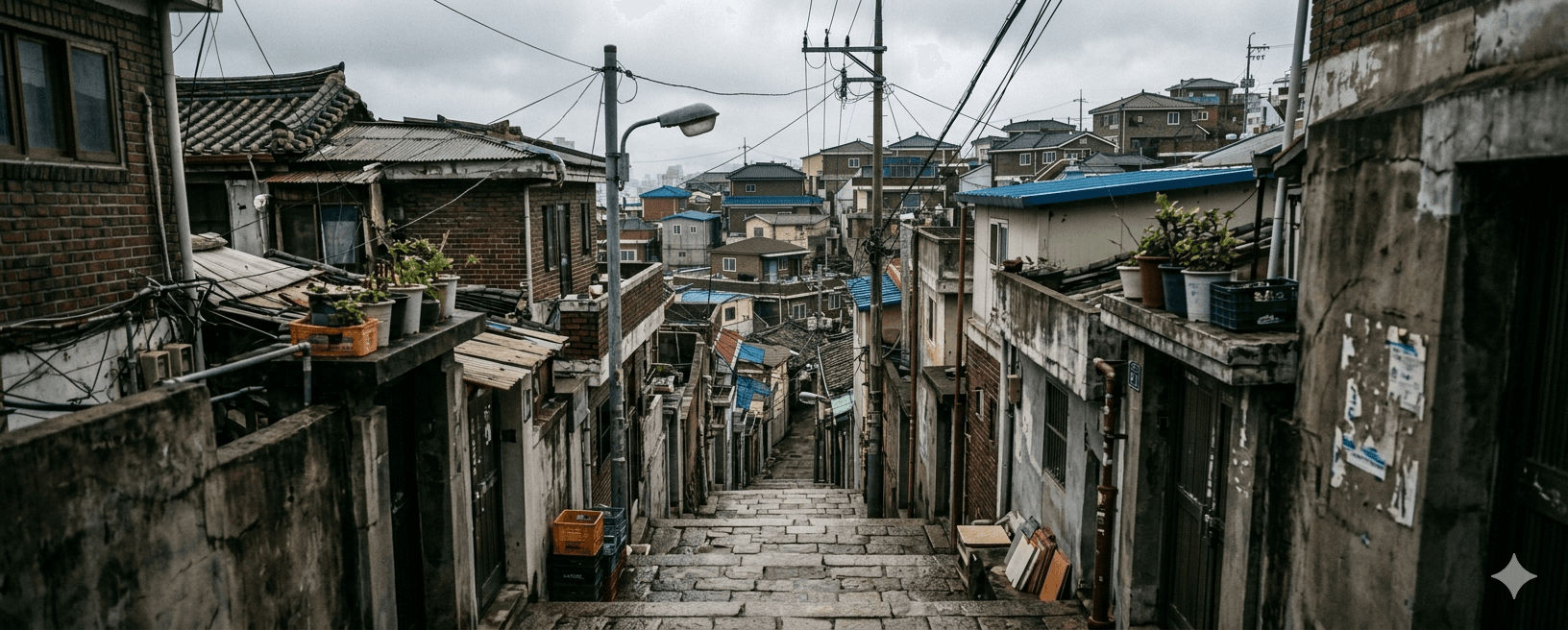
The selection of the Jahamun stairs in Jongno-gu was equally deliberate. Bong and his location scouts spent weeks searching for the perfect stairway that would visually convey the Kim family's descent — both literal and figurative — from the Parks' elevated world back to their flooded neighborhood below. The steep, winding steps near Jahamun-ro, surrounded by narrow alleys and aging rooftops, captured exactly the cramped, downhill tumble the director envisioned. For the climactic rain-flooding sequence, the production team engineered a sophisticated water drainage system built into the studio set, pumping thousands of liters of water through the semi-basement interior to create the devastating flood. The entire film was produced on a budget of approximately $14.5 million (KRW 17.5 billion), remarkably modest for a production of this scale and ambition.

Filming Location Travel Guide

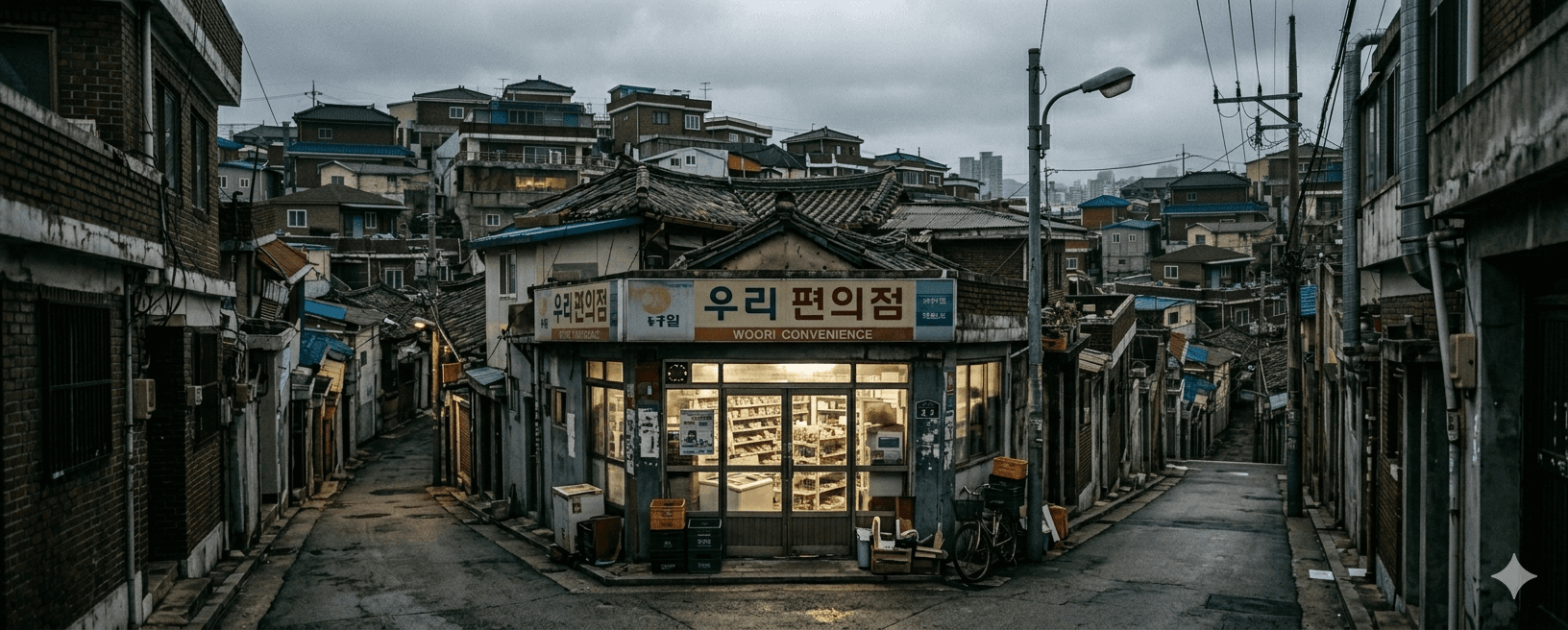
Visiting the real locations of Parasite works perfectly as a half-day itinerary through western Seoul. Start at the Jahamun Stairs, the most iconic spot from the film. Take Subway Line 3 to Gyeongbokgung Station, Exit 2, then walk northwest for about 15 minutes along Jahamun-ro. The steep stairway is tucked into a residential hillside — you will recognize it immediately from the film's rain-soaked descent scene. From there, head to the Woori Supermarket area in Mapo-gu, where the Kim family folds pizza boxes in the opening scenes. Take Subway Line 6 to World Cup Stadium Station and walk approximately 10 minutes south. The original storefront has changed, but the surrounding streetscape remains unmistakable. Finally, for dedicated fans, the Goyang Aqua Studio where the Park mansion was built is accessible from Juyeop Station on Line 3 followed by a 10-minute taxi ride. While the set itself has been dismantled, the studio complex occasionally hosts exhibitions related to the film.

The best seasons to visit are spring (April-May) and fall (October-November), when comfortable walking temperatures and clear skies make the outdoor locations most enjoyable. One important note: the Jahamun Stairs area is a residential neighborhood where people actually live, so visitors should keep noise levels down and be respectful of local residents, especially in the early morning and late evening.

Fan Pilgrimages

The post-Oscar tourism boom transformed these quiet Seoul neighborhoods into international destinations almost overnight. Within weeks of the February 2020 Academy Awards ceremony, visitors from around the world began appearing at the Jahamun Stairs, phones in hand, recreating the iconic descent. The most popular photo angle is from the bottom of the stairs looking upward, which mirrors the cinematography of the film's rain sequence and dramatically conveys the steep vertical drop.

Jongno-gu district responded to the influx by installing information boards at key locations, offering context about the filming in both Korean and English. The stairs and surrounding alleyways have become staples of Seoul walking tours marketed to international tourists. On social media, hashtags like #ParasiteStairs, #ParasiteFilmingLocation, and #BongJoonho have generated millions of posts, with the stairway ranking among Seoul's most-photographed spots on Instagram. The area around the stairs has also seen organic development, with a small cafe street emerging along the walking route where visitors can rest and reflect on the film over a cup of coffee.

Nearby Food & Attractions

The filming locations sit within easy reach of some of Seoul's most rewarding neighborhoods for food and sightseeing. From the Jahamun Stairs, the charming Seochon cafe street is just a short walk south. This quiet neighborhood west of Gyeongbokgung Palace is home to independent roasters, traditional rice cake shops, and art galleries tucked into renovated hanok houses. Heading slightly north, Buam-dong offers a collection of excellent local restaurants serving Korean comfort food — try the famous handmade dumplings at one of the neighborhood's longstanding eateries.

Culture lovers can easily extend the day with a visit to Gyeongbokgung Palace, just minutes from the stairs, followed by a stroll through the galleries and boutiques of Samcheong-dong. Near the Woori Supermarket location in Mapo-gu, the surrounding streets offer authentic local dining options — from hearty jjigae (stew) restaurants to neighborhood-style Korean barbecue joints that rarely appear in guidebooks but deliver outstanding meals. For visitors planning to stay overnight in the area, several beautifully restored hanok guesthouses in the Bukchon and Seochon neighborhoods provide a uniquely Korean lodging experience within walking distance of the main filming spots.

📍 Filming Locations

1

자하문 계단 (기택네 동네 계단)

서울 종로구 자하문로 일대

폭우가 쏟아지는 밤, 기택 가족이 반지하 집으로 돌아가며 내려가는 긴 계단 장면

지하철 3호선 경복궁역 2번 출구에서 도보 15분

37.5847, 126.9665

View on Map

Google Maps

Search nearby hotels
2

우리 슈퍼마켓 (피자박스 접는 가게)

서울 마포구 성산동 일대

기택 가족이 피자박스를 접는 아르바이트를 하는 장면의 촬영지

지하철 6호선 월드컵경기장역에서 도보 10분

37.5670, 126.9093

View on Map

Google Maps

Search nearby hotels
3

고양 아쿠아 스튜디오 (박사장 저택)

경기도 고양시 일산서구

박사장 가족이 사는 호화 저택은 세트로 제작되었으며, 고양 아쿠아 스튜디오에서 촬영

지하철 3호선 주엽역에서 택시 10분

37.6755, 126.8947

View on Map

Google Maps

Search nearby hotels

🧳 Plan Your Trip

🎬 Related Works